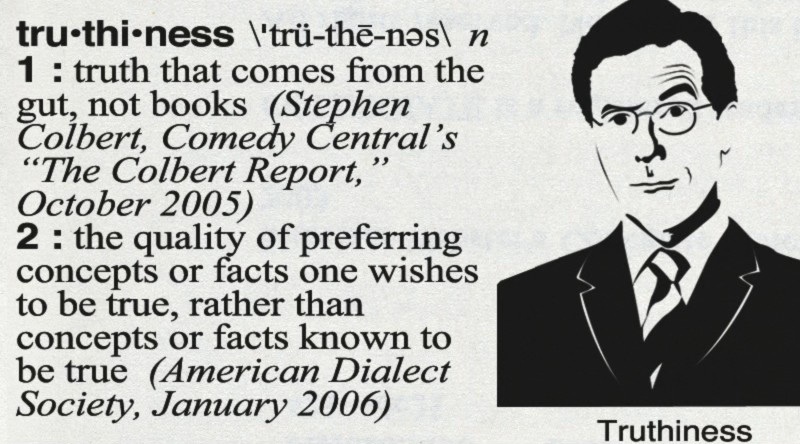
The growing spread of misinformation and its creep into my personal sphere troubles me. Last month, I pitched a story to The Moth about wielding “radical truth with boundaries” like a weapon, and this experience still weighs on my mind.
What is right?
My first major grapple with truth came when I discovered I had been manipulated by a family member throughout my life. I’ve written about this time period previously, but in brief: I spent months trying to make this family member understand our unhealthy dynamic. During this process, I realized my own actions weren’t matching my stated values, which ultimately led to my stay in an inpatient mental health facility.
My second wrestle with truth involved a difficult colleague who deliberately undermined his organization’s core values. He would strategically withhold information from those who disagreed with him, then discredit them when they appeared uninformed. I tend to view the world strategically and can miss political undercurrents. While I usually assume the best in others, this was my first experience with someone who prioritized personal power over organizational success.
My third clash with truth came from a supervisor who believed himself the smartest person in every room. His attitude particularly grated on our team of type A personalities. Two incidents stand out: I received explicit directions for aircraft maintenance and budget allocation that were—to put it diplomatically—suboptimal. After gathering my team, clarifying the directions, and making one final “but sir” appeal for each issue, I watched as he told my teams that I had misinterpreted his instructions.
These three experiences heightened my awareness of those who prefer being right over being correct—those who default to blame rather than examining their own contributions. While these experiences sharpened my commitment to truth-seeking, this approach still sometimes backfires.
What is true?
Tim Urban developed the thinking ladder as a framework to move past a conversation on right versus wrong to a nuanced one on truth. I would love to be a scientist, but I admit to being a biased sports fan. However, I find myself surrounded by an increasing number lawyers and zealots.
Seeking truth has worked well for me the past few years. It helped me hurt my wife less. It helped me understand what news to consume to differentiate trend lines from headlines. It helped me focus my team at work on efforts that achieved tangible improvements on our five customer services, regardless of the “optics” I’m often cautioned.
Unfortunately, my relentless use of reason ran smack into an emotional wall. To another person, your agnostic search for truth can come across as telling of them they are wrong. This is what I was inadvertently doing.
What is useful?
Paul Graham uses correctness as one of his four tests for useful communications. I think the other three tests help determine when to speak the truth you hold:
- Is it important? A flight safety issue demands truth. Celebrity gossip about celebrity legal troubles? Not so much. Let it go.
- Is it novel? When you find yourself repeating the same truth over and over, the recipient isn’t getting it. This doesn’t mean what you’re saying isn’t true, but does signal that your approach isn’t working.
- Is it strong? Sometimes complexity gets in the way. Richard Feynman aimed to explain concepts so clearly that a child could understand them, while Charlie Munger emphasized the deep work needed to form a valid opinion.
What is important?
Marshall Rosenberg teaches that empathetic communication focuses on observing others’ feelings and needs to meet their expressed or unspoken requests. I’ve been practicing “OFNR” for a few weeks and am pleasantly surprised by its effectiveness. It awakens my natural curiosity and keeps judgment at bay. Each conversation becomes a mystery to solve, making me a better listener and helping me understand what truly matters to the other person.
Putting it all together
That’s a lot of frameworks to remember, even for me!
When I struggled to land this post with a nice conclusion, I asked my wife for a suggestion and watched as she naturally put OFNR into action. Her response to my request was simple: listen to learn.
Listen what the other person is saying and learn what’s useful to say in the moment. In due time, you’ll both settle on a shared truth and avoid making the other feel wrong.
 Patience and Humility
Leave a comment