There’s plenty of advice on setting priorities and accepting that we can’t be everything to everyone. Dave Ramsey and Eli Goldratt apply these concepts specifically to disappointing commercial lenders and letting low-priority work languish. While this approach to prioritizing limited resources makes intuitive sense, I find it falls short when dealing with people’s emotional needs. This is where my interest in the intersection of workflow and leadership comes into play.
Financial disappointment
Cable, internet, phone, and insurance companies are notorious for their poor customer service. My wife recently experienced Amazon’s new, more complicated return process firsthand. Meanwhile, credit card companies seem to have no trouble finding me, though the reverse isn’t true. These industries have deliberately sacrificed quality customer service to cut costs and boost profits.
But these are impersonal, transactional relationships with corporations. I’m more concerned with face-to-face leadership. How can one reconcile intentionally disappointing people they genuinely care about?
Relationship disappointment
I often disappoint people at work, particularly by checking email only at the beginning and end of each day. Since 2018, I’ve noticed that about 90% of my emails are either resolved by others or become irrelevant before I read them. The remaining messages are added to my task manager or read later at my convenience [1]. Though senders have expressed a preference for quick responses, people manage to find me when a matter is truly urgent or important [2]. These Theory of Constraints principles enable me to focus on and complete my highest priorities at a natural pace, with an unwavering emphasis on quality. Cal Newport would approve.
Given this approach, should I be concerned when my organization’s HR system reprimands me for missing their deadlines?
Value chains
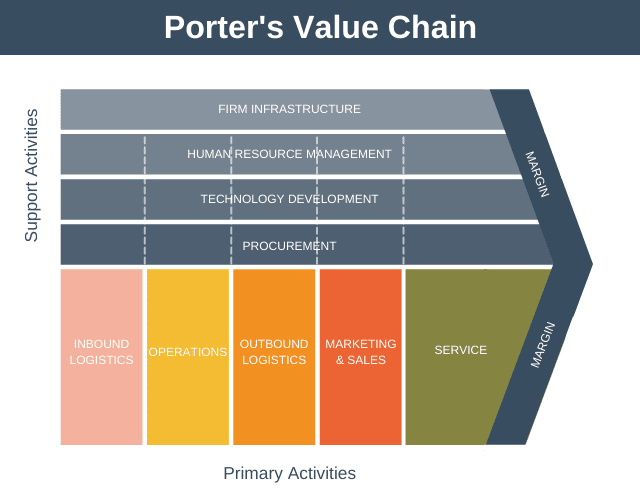
Michael Porter teaches that value is added and competitive advantage maintained through five primary activities within an organization. In my current role, I provide five services, each with its own value chain:
| Inbound logistics | Operations | Outbound logistics | Marketing & sales | Service | |
|---|---|---|---|---|---|
| Depot maintenance | Aircraft & component inductions | Production processes | Aircraft & component deliveries | N/A, mandated by policy | Field teams |
| Engineering support | Technical & engineering service requests | Engineering processes | Analyses & reports | N/A, mandated by policy | Field teams |
| Supply chain management | Requisitions | Supply processes | Shipments | N/A, mandated by policy | Local aviation materiel offices |
| Information services | Change requests | DevSecOps processes | Software releases | [3] | Field teams |
| Procurement | Requirements package | Contracting & procurement processes | Contract or purchase order | N/A, mandated by policy | Local supply offices |
Note that firm infrastructure and human resource management are only support activities, while technology and procurement serve as both primary and support activities in my role. Support activities exist to enhance the primary ones. Therefore, it’s best to focus on them only up to the point of diminishing returns. [4]
Local optima
We now have a framework for allocating disappointment in relationships.
First, we must synchronize priorities across both primary and support activities. Many organizations use complex enterprise resource planning software, but the focus should be on simple, integrated processes. Does everyone understand that the goal is to maximize primary activity throughput? Can everyone determine the priority of work within each activity? Do interdependent activities signal priority to each other?
Next, we must allocate maximum resources to the highest priorities. This sounds logical in principle, but in practice, people quickly become uncomfortable. It feels more natural to assign work to available people rather than assigning people to essential work. Management worries about underproduction—idle employees aren’t producing. Employees fear overproduction—if others are more productive, they may see their jobs as threatened. However, this localized inefficiency serves the greater purpose of maximizing the system’s overall productivity.
Disappointing people
Should I care about disappointing people I care about at work? Yes, but only to the extent that it detracts from my primary activities.
I can’t put off HR indefinitely. Eventually, neglecting employee performance reviews, document requests for investigations, or emails will impact my ability to manage my five value chains. Without performance awards, top employees may lose motivation. Good order and discipline could deteriorate, demanding even more attention to support activities. My reputation with my boss, peers, and team might erode. Ultimately, talent could walk out the door, accelerating the decline.
While we can build systems for managing physical and knowledge work processes, relationships still require conversation. A deadline is an expectation, and people deserve to have their expectations managed if they can’t be met. Explaining to HR (preferably in advance) that you’ll be late, where they fall in your priorities, and when you plan to deliver accomplishes this. So does poking fun at yourself for only checking email twice daily.
Develop your productivity system, but remember that other people are part of it. Don’t bludgeon others with it; instead, use it to manage—and then exceed—their expectations.
References
- How I Answer Email in 17 Minutes a Day – My System (youtube.com)
- The Decision Matrix: How to Prioritize What Matters (fs.blog)
- A few months ago, I realized that business development representatives often visit our headquarters executives with polished pitches for software competing with the fourteen applications I manage. This made me wonder: Are these companies superior in software development or sales? My team includes talented DevSecOps professionals, and we strive to meet user needs. However, it’s headquarters—not our users—who fund us. I’m curious how the dynamic might shift if we had internal sales representatives making compelling pitches or if we could charge competitive rates.
- Interestingly, these two activities—information service and procurement—cause the most frustration for others in our workplace. Initially, I thought this was because they’re the only two with external customers. However, perhaps we’re trying to force support activities into roles they’re not designed for.
 Patience and Humility
Leave a comment